Whether you are launching a commercial brand across East Africa, documenting humanitarian impact for international donors, or broadcasting a high-profile national event, visual storytelling makes or breaks your campaign. Audiences and stakeholders expect crisp, emotionally resonant, and culturally grounded content.
Yet finding the right media production company in Juba comes with unique operational challenges. From navigating public filming clearances to sourcing reliable cinema gear and managing tight turnaround schedules, hiring an unvetted freelancer can stall your timeline before the first frame is shot.
As a full-service media production partner in East Africa, we have worked alongside NGOs, government institutions, international sports bodies, and corporate brands since 2016. Use this practical guide to evaluate production partners in Juba and ensure your next campaign delivers measurable results.
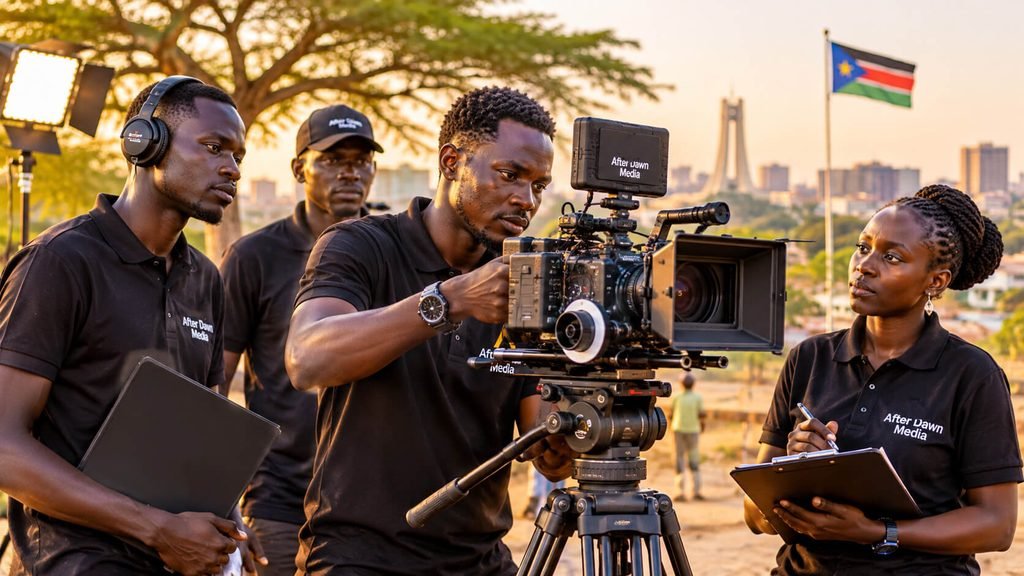
Editorial documentary photograph of a professional East African film crew setting up a cinema camera on a tripod at golden hour in Juba, South Sudan
1. Evaluate Their Local Track Record and Sector Experience
A flashy highlight reel means little if the team has never executed a project under real-world field conditions in South Sudan. Before signing a contract, examine a prospective agency’s proven portfolio of documentaries and brand campaigns across multiple sectors.
Look for:
- Cross-Sector Versatility: Have they worked with humanitarian organizations, UN agencies, financial institutions, and private enterprises? Corporate commercials require a different pacing and visual language than donor impact documentaries.
- Cultural and Linguistic Fluency: South Sudan is richly diverse. A strong local crew understands community dynamics, speaks local languages (including Juba Arabic and regional dialects), and knows how to put interview subjects at ease on camera.
- Verified Client Testimonials: Ask for references from recent clients—especially international teams or organizations with strict compliance standards. Working with an experienced East African creative team that has established regional credibility saves you from costly missteps.
2. Verify Permitting, Logistics, and On-the-Ground Access
One of the biggest hidden bottlenecks in South Sudan is regulatory clearance. Filming in public spaces, government buildings, markets, or upcountry states requires proper permits and coordination with local authorities.
Flying in an outside crew without local representation often leads to confiscated gear, halted shoots, and blown budgets. When vetting media production services in Juba, ask:
- Do you handle filming permits and location clearances? An established Juba agency maintains working relationships with relevant ministries and local authorities, securing approvals ahead of shoot day.
- How do you manage upcountry travel and power backup? Production outside Central Equatoria requires reliable transport, portable power solutions, and contingency planning for weather and connectivity.
3. Inspect Camera Gear, Audio, and Post-Production Capabilities
A high-resolution camera body alone does not guarantee broadcast-ready quality. Poor audio, harsh midday lighting, or rushed editing will undermine even the strongest script.
Evaluate the technical depth of your shortlist:
- In-House Equipment vs. Last-Minute Rentals: Agencies that own and maintain cinema cameras, prime lenses, stabilizers, lighting kits, and dual-system wireless audio avoid rental delays and equipment failure in the field.
- Full Post-Production Suite: Confirm that professional videography and post-production happen under one roof—including color grading, sound design, motion graphics, lower thirds, and multi-language subtitling (English, Juba Arabic, or French).
- Multi-Format Deliverables: Modern campaigns rarely use a single video file. Your partner should deliver master 4K/1080p edits alongside vertical cutdowns (9:16) for social media, compressed versions for WhatsApp distribution, and clean archival footage.
4. Look for Integrated Multi-Channel Campaign Support
Coordinating separate vendors for video, still photography, graphic design, printing, and web deployment creates brand inconsistency and administrative headaches.
The best production partners operate as an integrated creative hub:
- Cohesive Visual Identity: Pairing video production with high-impact commercial and documentary photography ensures your press releases, annual reports, billboards, and social media channels share a unified look and feel.
- Print and Digital Execution: If your campaign also needs event banners, branded merchandise, or a dedicated campaign landing page, choosing a team with in-house printing and web development keeps deadlines tight and quality consistent.
5. Assess Ethical Storytelling, Safeguarding, and M&E Alignment
For NGOs, development partners, and public health initiatives, how a story is captured matters just as much as the final cut.
- Informed Consent and Dignity: Ensure your production team follows strict safeguarding protocols, uses clear written or recorded consent forms, and portrays communities with dignity rather than exploitative tropes.
- Data-Driven Impact: Great campaign media aligns with your Monitoring and Evaluation (M&E) framework. Partnering with an agency that understands research, evaluation, and media solutions helps translate complex project indicators into clear, human-centered narratives that resonate with donors and policymakers.
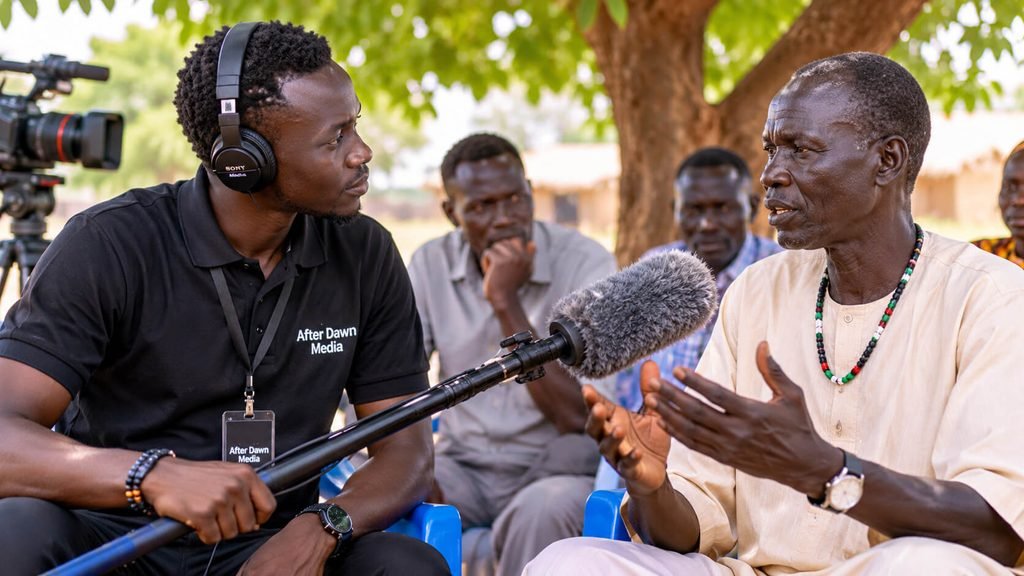
Caption. Respectful, warm portrait of an East African interviewer holding a boom mic stand while listening attentively to a community leader outdoors under shade
6. Compare Transparent Pricing and Custom Packages
Be cautious of quotes that consist of a single lump-sum figure with no breakdown. Transparent proposals protect both you and the production team from scope creep.
A reliable quote should clearly itemize:
- Pre-Production: Concept development, scripting, storyboarding, and location scouting.
- Production Days: Crew size, camera/lighting/audio packages, transport, and local logistics.
- Post-Production: Editing days, motion graphics, voiceover, music licensing, and the number of included revision rounds.
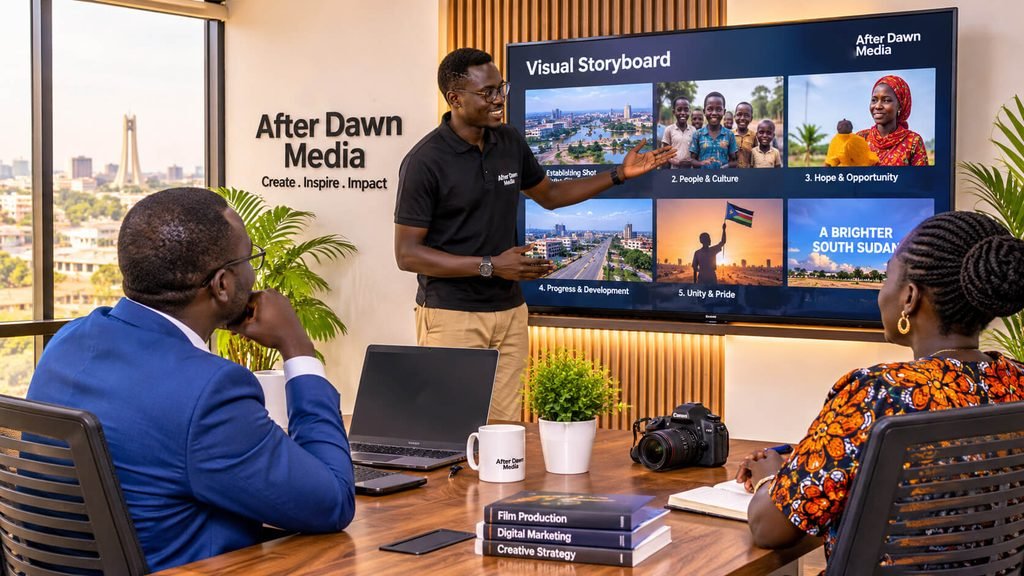
Caption: Modern, welcoming creative agency meeting room in Juba with a South Sudanese creative director presenting a visual storyboard on a large screen to two clients
Frequently Asked Questions
Do I need a permit to film in Juba, South Sudan?
Yes. Filming in public spaces, commercial areas, or government facilities in Juba requires official clearance. Working with a registered local media production company ensures permits are arranged properly before filming begins.
How long does a typical corporate or NGO video production take in Juba?
A standard 2-to-3-minute documentary or brand profile typically takes 2 to 4 weeks from initial briefing and permitting through filming, editing, and final client revisions. Urgent event coverage or same-day social media edits can be turned around within 24 to 48 hours.
Can one agency handle photography, video, and printed campaign materials together?
Yes. Full-service agencies like After Dawn Media integrate photography, documentary videography, graphic design, large-format printing, and web solutions so your entire campaign launches seamlessly.
Ready to Launch Your Next Campaign in Juba?
Choosing the right media production partner comes down to local trust, technical capability, and creative vision. Since 2016, After Dawn Media has helped brands, NGOs, and institutions across South Sudan and East Africa turn ambitious ideas into compelling visual stories.
Have a brief, tender, or upcoming campaign in mind? Request a custom campaign quote from our Juba team or reach out directly via WhatsApp at +211 (0) 923 797979 to discuss your project timeline.