Every time a documentary crew steps into a community facing crisis, poverty, or displacement, the camera carries immense power. For humanitarian organizations, non-governmental organizations (NGOs), and development partners, visual storytelling is one of the most effective tools for raising awareness, mobilizing funding, and advocating for policy change. Yet, how a story is framed determines whether a film empowers the people on screen or reduces their lives to a spectacle of suffering.
For decades, humanitarian media relied heavily on shock value—a practice widely criticized as “poverty porn.” While emotionally jarring imagery may trigger short-term sympathy, it strips individuals of their dignity, reinforces harmful stereotypes, and obscures the systemic causes behind a crisis. True impact requires a fundamental shift: placing human dignity, transparency, and collaboration at the center of every production. At After Dawn Media, we believe that compelling documentary filmmaking and uncompromising ethical standards are not competing priorities they are inseparable.
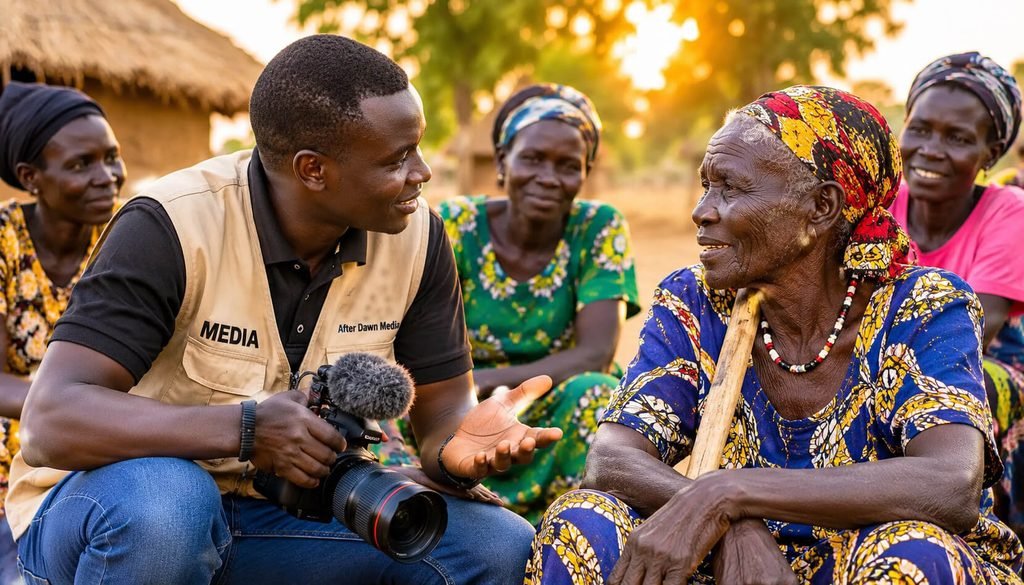
Visual Placement Header / Section 1 Image:
Caption: A documentary filmmaker crouching down at eye-level to converse softly with an elderly community member outdoors, natural golden hour lighting, cinematic depth of field, authentic candid style.
Moving Beyond Pity: Centering Agency and Resilience
When communities are portrayed solely as passive recipients of aid, the narrative subtly communicates that outside intervention is the only source of strength in the room. In reality, local communities are almost always the first responders to their own challenges innovating, organizing, and sustaining one another long before a film crew arrives and long after it leaves.
Ethical NGO documentaries shift the camera’s focus from helplessness to agency:
Highlight Local Leadership: Feature community organizers, local health workers, educators, and elders as the primary authorities on their own realities, rather than relying exclusively on external experts to narrate their experiences.
Frame with Dignity: Visual composition matters. Filming subjects from high angles looking down creates a subconscious visual hierarchy of power and vulnerability. Shooting at eye level establishes equality, respect, and mutual presence.
Show Solutions Alongside Struggles: Documenting hardship is often necessary to explain why an intervention matters, but pairing those realities with local resilience, skill-building, and active problem-solving provides a fuller, more truthful picture.
To see how dignified, narrative-driven visual production translates into powerful organizational impact across East and Central Africa, explore our documentary and media production portfolio.
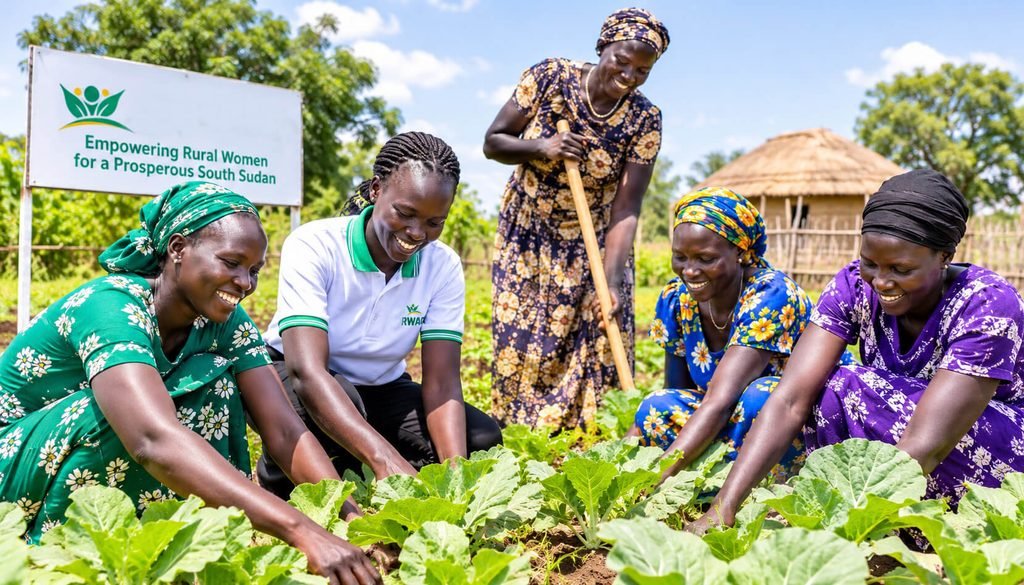
Visual Placement Section 2 Image:
Caption: Wide documentary framing of women working together on an agricultural or community project, portraying strength, capability, and collaboration rather than distress, warm natural light.
Informed Consent as an Ongoing Dialogue, Not a Form
In fast-paced field productions, consent is too often treated as a bureaucratic checkbox: hand a participant a printed form, secure a signature or thumbprint, and start rolling. When working with vulnerable populations especially those navigating low literacy, language barriers, or power imbalances a rushed signature does not constitute true consent.
Meaningful consent is an ongoing, transparent conversation that prioritizes the contributor’s understanding over production schedules:
Communicate in Local Languages: Always work alongside trusted local translators who can explain the purpose of the film, where it will be distributed (social media, donor reports, international broadcasts), and potential risks in clear, everyday language free of technical jargon.
Clarify the Right to Say No: Make it unmistakably clear that declining to be filmed, pausing an interview, or asking to omit specific details will never affect their access to humanitarian aid, community services, or support programs.
Practice Collaborative Playback: Whenever possible, show participants rough clips or photographs on location. Allowing contributors to see how they are being represented builds trust and gives them genuine editorial input into their own stories.
Planning an upcoming field documentary and need a production team trained in community-first protocols? Reach out to our production coordinators to discuss ethical pre-production planning.
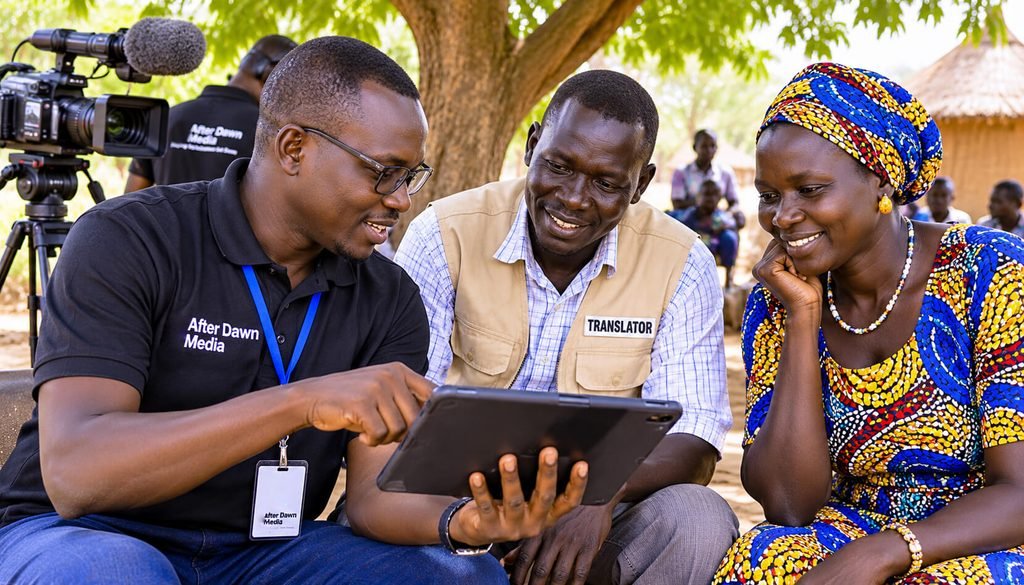
Visual Placement Section 3 Image:
Caption: A production crew member explaining story usage on a tablet with a local translator present, showing clear communication and relaxed expressions, natural outdoor shade.
Trauma-Informed Production: Protecting Subjects On and Off Screen
Filming in post-conflict zones, displacement camps, or medical outreach settings frequently involves speaking with survivors of trauma. Without careful preparation, an interview can inadvertently force a contributor to relive painful experiences solely to capture an emotional soundbite.
A trauma-informed production workflow safeguards both emotional well-being and physical security:
Create a Safe Physical Environment: Conduct interviews in quiet, familiar spaces where the contributor feels comfortable and unhurried. Keep crew footprints small large crowds of technicians, heavy rigging, and intrusive lighting can feel intimidating.
Avoid Coercive Questioning: Never press a subject to cry on camera or recount graphic details of trauma if they hesitate. Focus questions on their present reality, their perspectives, and what they want decision-makers to understand.
Protect Identities When Risks Exist: For whistleblowers, survivors of gender-based violence, minors, or communities facing political sensitivity, visual anonymity is non-negotiable. Use creative framing such as silhouettes, over-the-shoulder perspectives, detail shots of hands at work, or voice-over narration—alongside secure digital file handling and protected web hosting infrastructures to ensure sensitive raw footage is never exposed.
Close the Loop After Release: Ethical storytelling does not end at final cut. Sharing the finished documentary back with the community whether through a local mobile screening or community playback honors their contribution and closes the storytelling circle with respect.
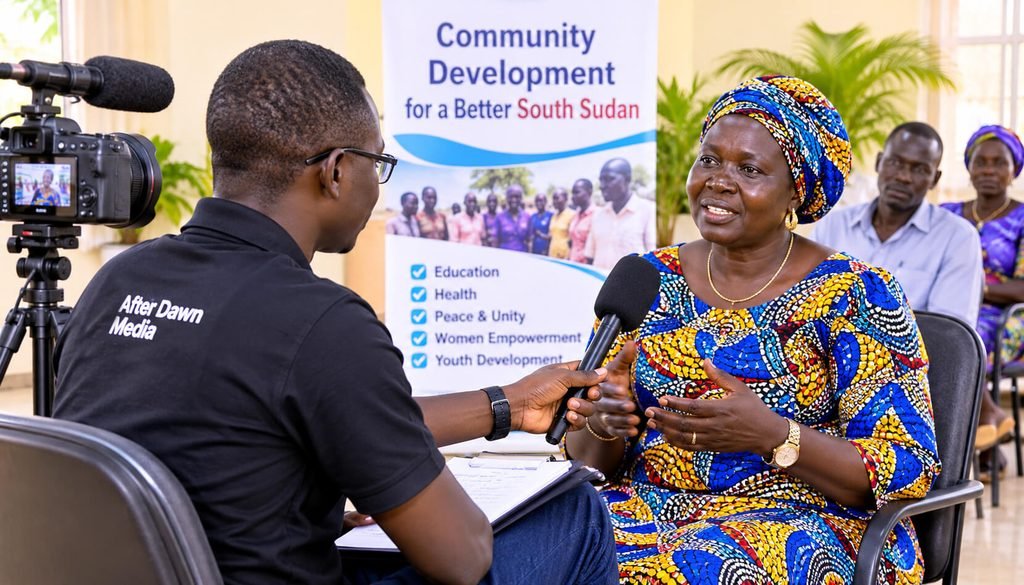
Visual Placement Section 4 Image:
Caption: A quiet, controlled interview setup inside a community center with soft, diffused lighting creating a safe, comfortable atmosphere for the interviewee, minimalist crew presence.
Elevating Impact Through Integrity
Audiences, institutional donors, and global partners are increasingly discerning. They recognize when a story is manufactured for sympathy, and they respond far more deeply to documentaries rooted in honesty, respect, and authentic human connection. When NGOs invest in ethical production practices, they protect the communities they serve while creating films that stand the test of time.
If your organization is preparing to document a field program, medical outreach, or community initiative, partnering with an experienced local crew ensures cultural fluency and ethical rigor from day one. Contact After Dawn Media to start planning your next documentary project.