For decades, humanitarian visual storytelling followed a predictable script: an international NGO (INGO) or donor agency commissions a foreign film crew, flies them into Juba for a tight ten-day production window, hires a local translator, and flies them out before the dust settles.
In 2026, that “parachute journalism” model is no longer just inefficient it is a liability. Institutional donors, philanthropic foundations, and global audiences increasingly scrutinize how humanitarian stories are produced. They can spot surface-level, outsider narratives immediately, and they are actively demanding genuine localization across every level of aid delivery.
When international nonprofits invest in professional media production in Juba, they do more than capture high-definition video. They unlock cultural trust, streamline complex field logistics, uphold ethical dignity, and maximize donor ROI. Here is why partnering with local South Sudanese storytellers is essential for your next NGO documentary.
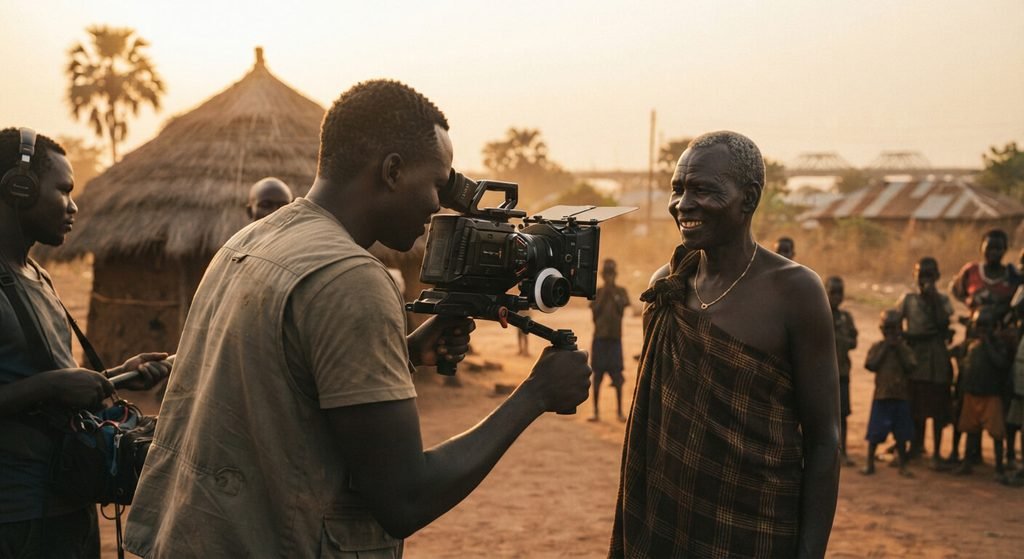
1. Cultural Nuance and Linguistic Trust
A documentary is only as strong as the honesty of the people in front of the camera. When an outside crew arrives with bulky rigs and unfamiliar faces, community members often feel guarded, intimidated, or pressured to perform a rehearsed script for foreign visitors.
South Sudanese filmmakers remove that invisible wall immediately. Working with a local documentary production team in South Sudan means your interviewers and sound engineers naturally speak Juba Arabic, alongside regional languages like Bari, Dinka, Nuer, Zande, or Acholi.
- Unfiltered Emotion: When a mother in Aweil or a farmer in Torit speaks directly to a South Sudanese director without the clunky stop-and-start rhythm of a third-party translator, the conversation flows naturally.
- Contextual Reading: Local storytellers understand subtle social dynamics, regional humor, and historical sensitivities. They know which questions build rapport and how to frame complex community challenges without misinterpreting local customs.
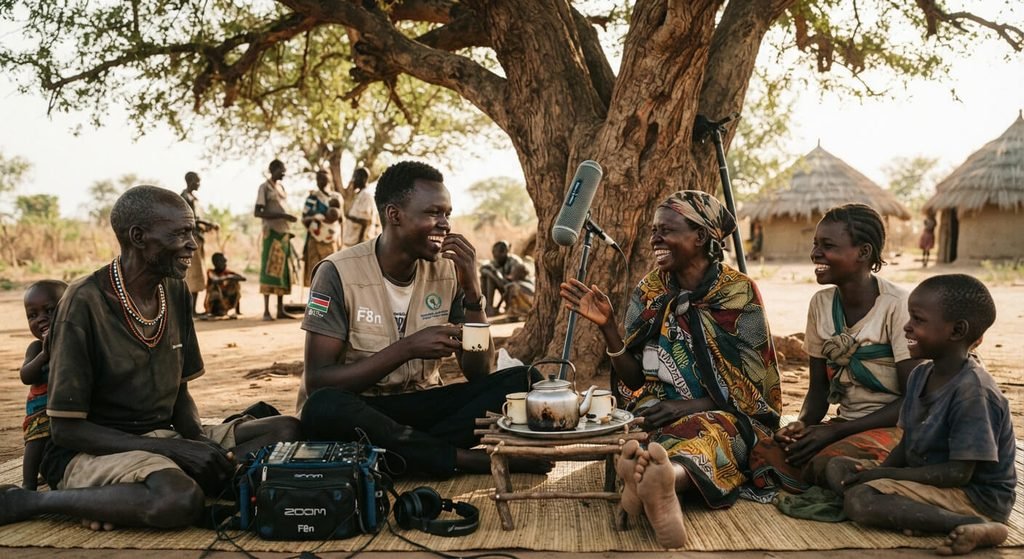
2. Navigating Logistics, Access, and Permits Seamlessly
Anyone who has managed operations in South Sudan knows that field logistics can make or break a project timeline. Filming outside Juba—whether in Central Equatoria, Jonglei, Upper Nile, or Western Bahr el Ghazal—requires careful coordination around seasonal road conditions, security clearances, and regulatory compliance.
International crews often lose days of expensive production time navigating unfamiliar bureaucracy. By contrast, an established local partner handles end-to-end production and field logistics as part of their daily workflow:
- Regulatory Compliance: Local crews know the exact protocols for securing South Sudan Media Authority (SSMA) filming permits, state-level clearances, and county commissioner approvals well before cameras roll.
- Adaptability on the Ground: Whether a sudden downpour washes out an airstrip or a community mobilization schedule shifts, local teams possess the networks, 4×4 transport, and regional contacts to pivot without derailing your grant deadline.
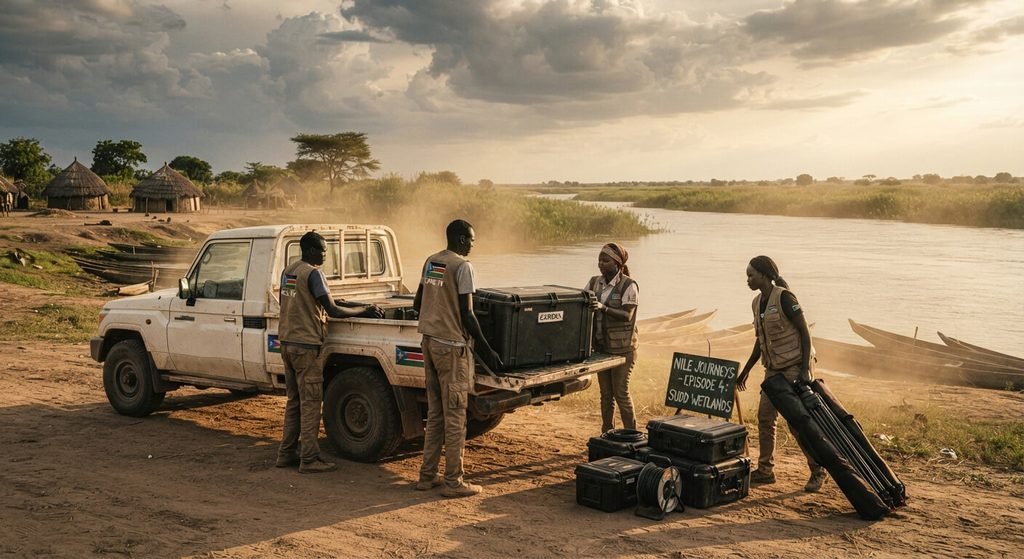
3. Ethical Representation and Dignity-First Framing
The humanitarian sector has rightly moved away from extractive “poverty porn” imagery that reduces resilient communities to passive victims in order to trigger short-term donor guilt. Today, ethical storytelling requires prioritizing subject agency, informed consent, and human dignity.
Practicing ethical documentary photography in Juba and across the country starts with shared identity. Local visual journalists are accountable to the communities they film long after the cameras are packed away.
- True Informed Consent: Local producers explain exactly where a film or photograph will be screened—whether in a Geneva donor boardroom, an annual report, or a global social media campaign—in a language participants genuinely understand.
- Strength-Based Narratives: Rather than focusing solely on crisis, local storytellers naturally recognize and highlight community leadership, grassroots innovation, and local resilience alongside your organization’s technical interventions.
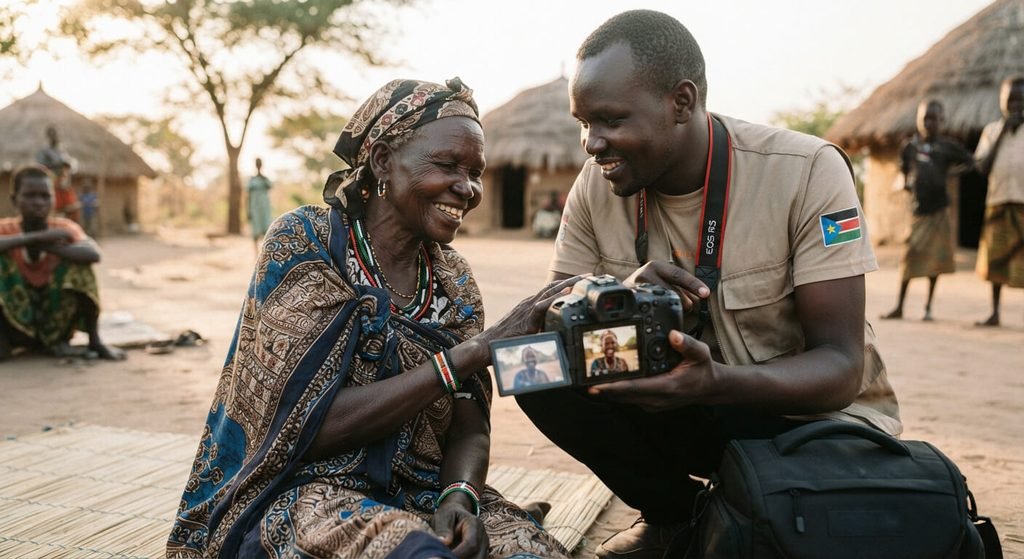
4. Cost-Effectiveness & Rapid Turnaround for Time-Sensitive Grants
Humanitarian funding cycles rarely wait for international flight schedules. When a donor requests a mid-term impact film, a crisis response update, or an end-of-grant video report, flying in an overseas crew inflates your budget before a single frame is shot.
Allocating your communications budget to a South Sudanese production house eliminates international airfares, excess baggage fees for cinema gear, foreign per diems, and jet-lag recovery days. More importantly, it delivers speed:
- Rapid Deployment: A Juba-based crew can mobilize to the field within days, capturing time-sensitive milestones such as medical outreaches, infrastructure handovers, or agricultural harvests at their peak.
- Local Economic Impact: Hiring local directors, cinematographers, editors, and sound technicians directly supports your organization’s localization mandate keeping donor funds inside South Sudan’s growing creative economy. You can view our past visual storytelling projects to see how local execution meets international broadcast standards.
5. Multi-Format Impact: From Film to Digital Campaigns
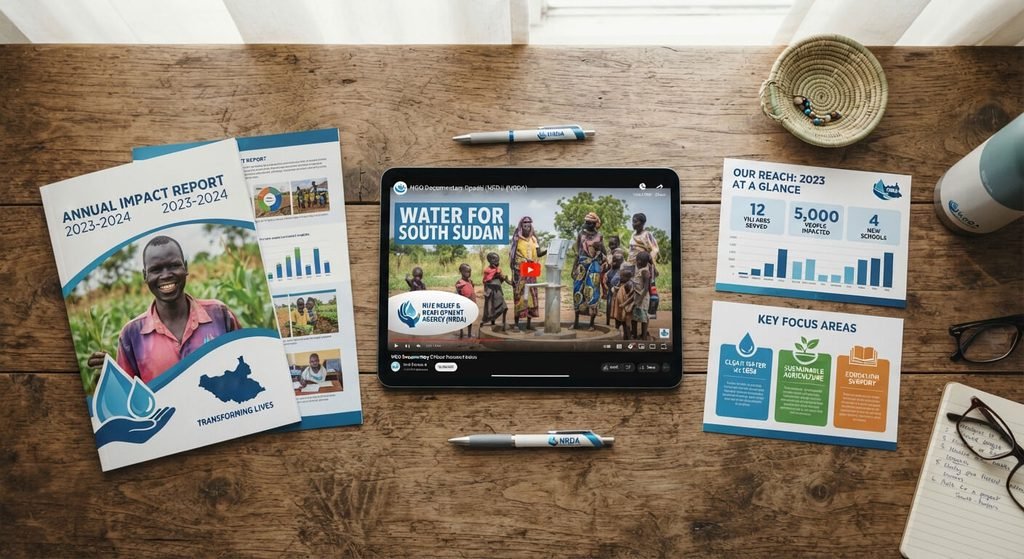
Modern NGO communications require more than a single ten-minute documentary sitting on YouTube. To satisfy institutional donors, engage board members, and reach digital supporters, your field shoot needs to fuel an entire ecosystem of assets.
By partnering with a full-service agency that combines filmmaking with campaign branding and custom NGO web platforms, you can stretch a single field mission across multiple deliverables:
- Hero Documentary & Social Cuts: A flagship 5-to-8-minute impact film paired with vertical 30-second reels for LinkedIn, X, and Instagram.
- Print & Publication Design: High-resolution editorial photo essays integrated seamlessly into printed donor brochures, policy briefs, and annual impact reports through local graphics design and large-format printing.
- Interactive Impact Portals: Dedicated campaign landing pages that combine video, data visualization, and field photography into an immersive donor experience.
Partner With Storytellers Who Know South Sudan Best
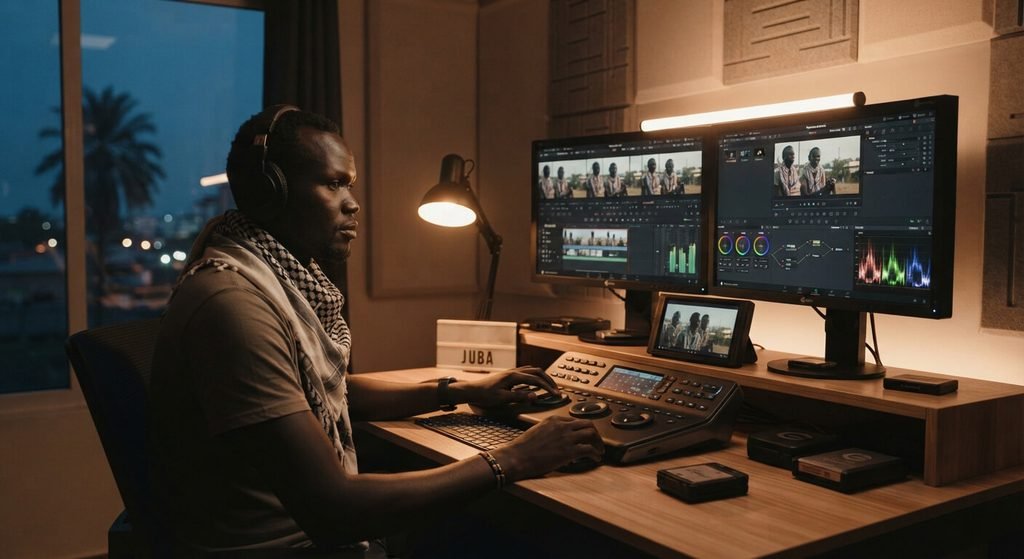
International nonprofits come to South Sudan to build lasting, locally owned solutions. Your visual storytelling should reflect that exact same commitment. When you trust local filmmakers with your narrative, your documentaries gain the emotional depth, cultural accuracy, and ethical integrity that move donors to act.
Ready to plan your next field documentary, photography mission, or donor campaign? Consult our Juba production team for your next documentary to discuss your project scope, locations, and timeline.